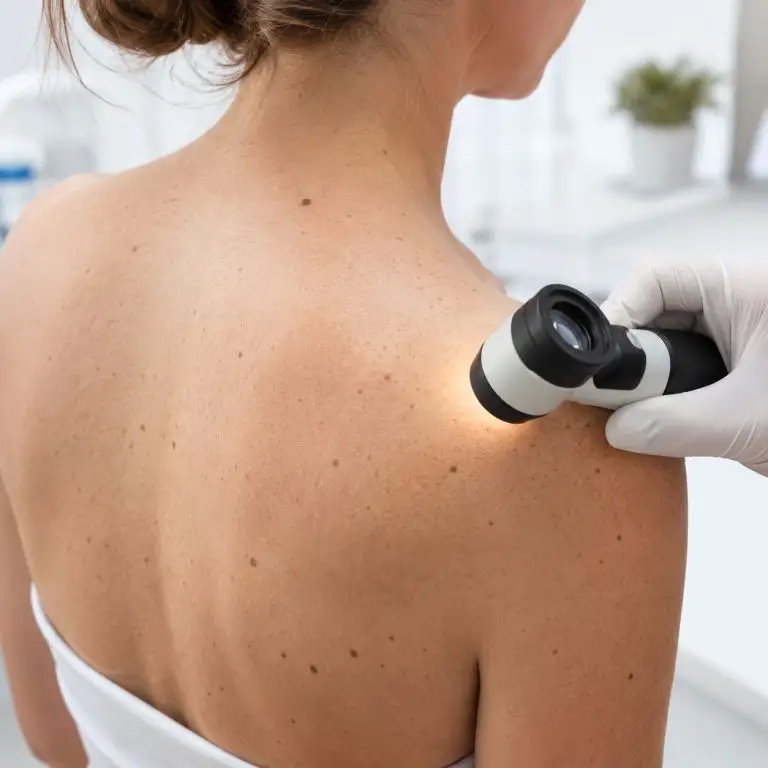
Moles are common skin growths that can appear anywhere on the body. They may be present at birth or develop gradually throughout childhood and adulthood. Most moles are harmless and remain unchanged over time, but it is important to watch for changes that could indicate melanoma or another type of skin cancer.
Common moles are typically round or oval with clearly defined borders. They may be flat or raised and can range in color from flesh-toned or pink to tan, brown or black. Moles develop when pigment-producing cells called melanocytes grow in clusters within the skin.
Moles that are present at birth are called congenital nevi. Larger congenital moles may require closer monitoring because they can carry a greater risk of developing melanoma.
Atypical moles, also called dysplastic nevi, are often larger than common moles and may have an irregular shape, uneven border or multiple colors. People with atypical moles may have an increased risk of melanoma and may benefit from routine skin examinations with a dermatologist.
Regularly examining your skin can help you recognize suspicious changes. Use the ABCDE method when checking your moles:
You should also schedule an evaluation if a mole begins itching, bleeding, becoming painful or looks noticeably different from your other moles.
Most moles are harmless, but any new, unusual or changing spot should be examined by a dermatology professional. The Dermatology Clinic can evaluate your moles, identify areas of concern and recommend monitoring or removal when appropriate. Contact us today to get scheduled.
We would love to get started on a solution that perfectly fits your needs.