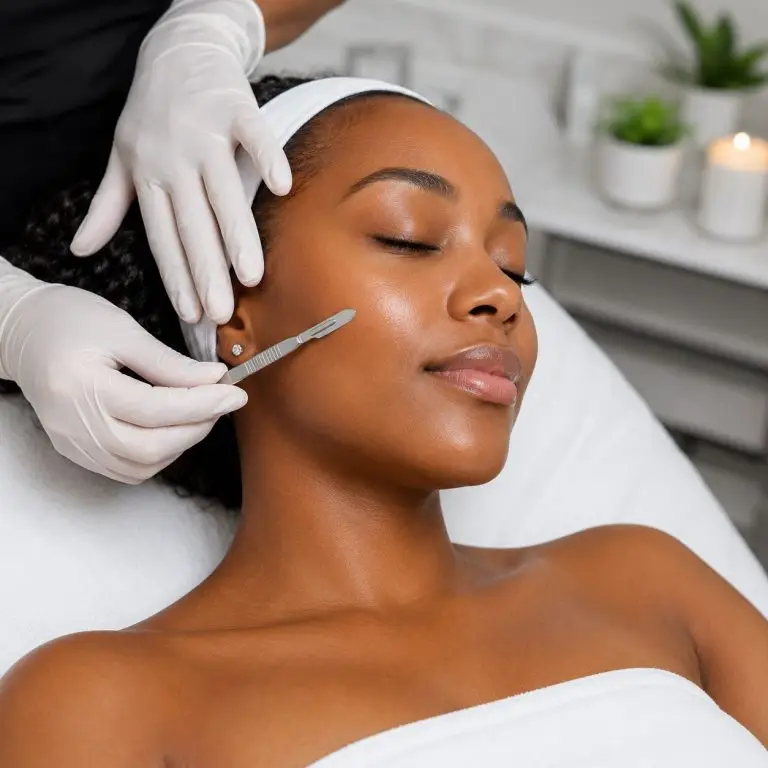
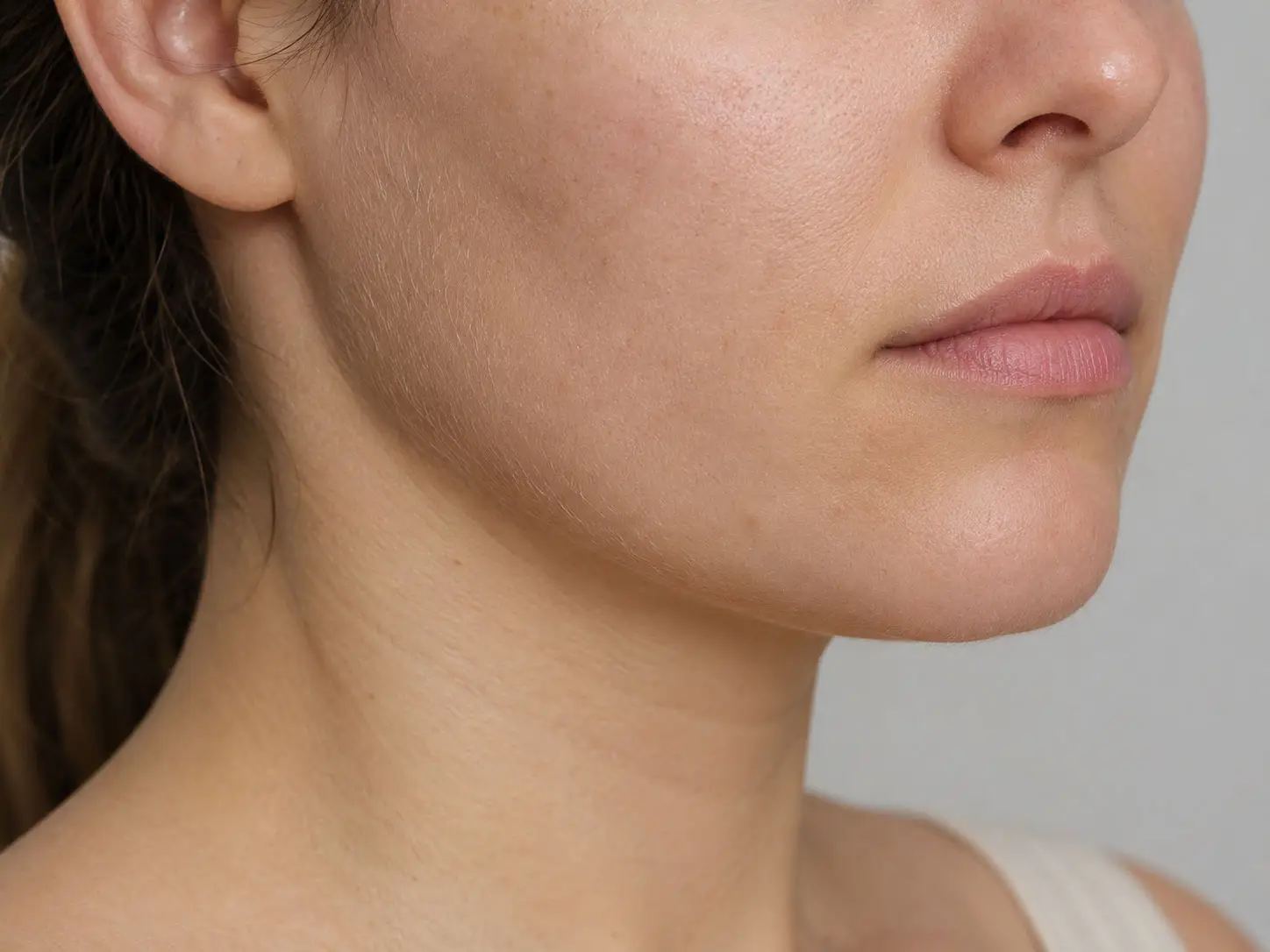
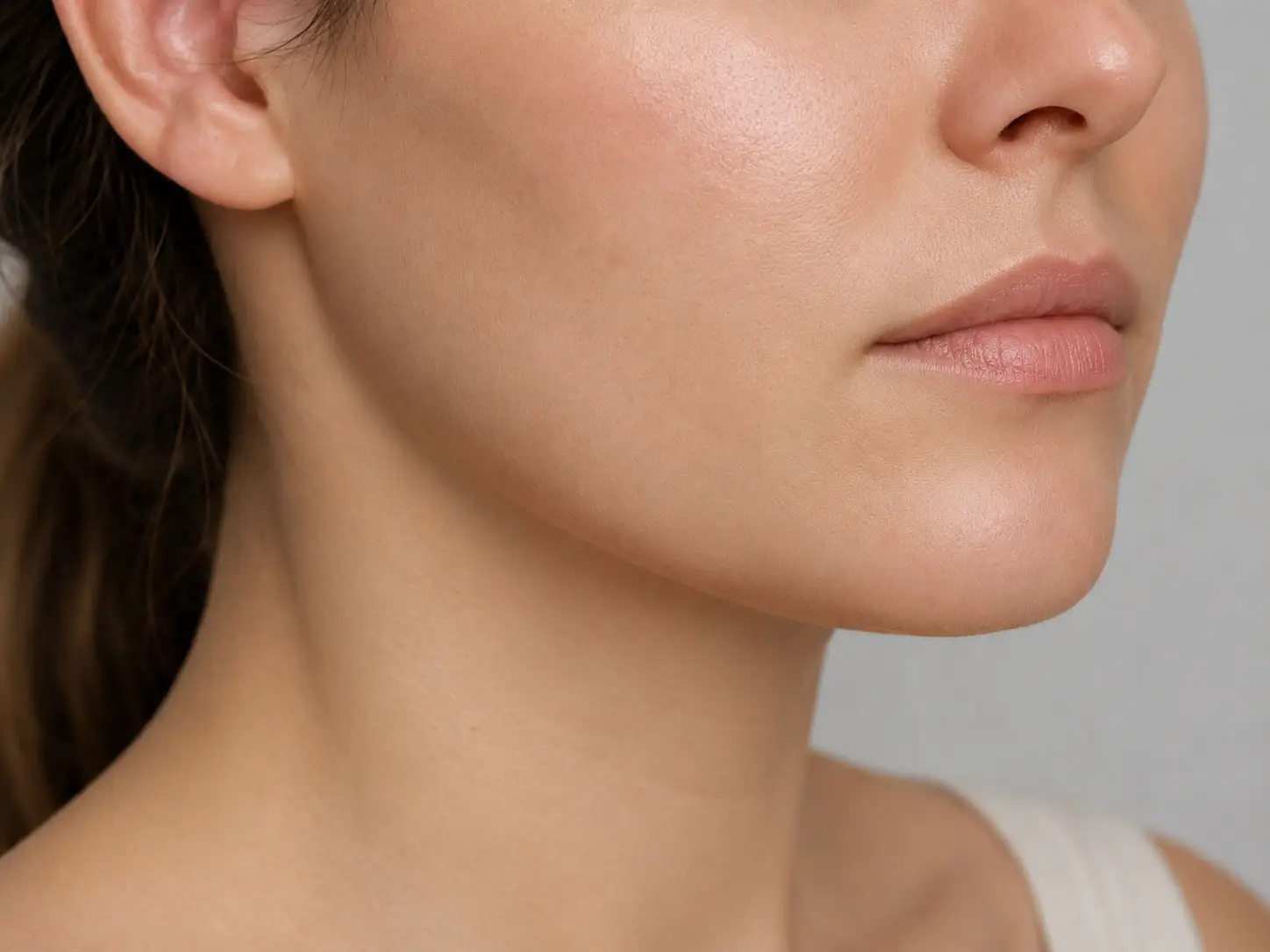
Dermaplaning is a gentle, noninvasive facial treatment that exfoliates the skin while removing fine vellus hair, commonly called peach fuzz. A trained provider uses a sterile blade to carefully lift away accumulated surface cells and hair, leaving the complexion feeling softer and smoother.
The treatment can provide an immediate refresh for dull, dry or uneven-looking skin with minimal downtime. It may be performed on its own or combined with selected facial enhancements for a more customized experience.
During dermaplaning, a sterile blade is held at a precise angle and gently moved across the skin. This removes fine facial hair and the outermost buildup of dead skin cells without making surgical incisions.
Removing this surface buildup can help the complexion appear smoother and brighter. Makeup may apply more evenly afterward and approved skin care products may spread and absorb more easily across the freshly exfoliated surface.
Dermaplaning may be recommended for patients concerned about:
Dermaplaning provides superficial exfoliation and does not treat every skin concern. Deep acne scars, significant wrinkles, pronounced pigmentation or active inflammatory skin conditions may require a different treatment or a combination of services.
The Dermatology Clinic performs dermaplaning on the full face and submental area beneath the chin. Your provider will evaluate the skin and avoid any areas where treatment could cause unnecessary irritation or injury.
Dermaplaning is generally not performed directly over active blemishes, open wounds, irritated rashes, raised skin growths or other areas that require medical evaluation.
Your appointment begins with an evaluation of your skin, current products, sensitivities and treatment goals. The skin is then thoroughly cleansed and prepared.
Your provider gently passes a sterile blade across the treatment area using controlled, precise movements. The blade removes fine vellus hair and accumulated surface cells without cutting into healthy skin.
After dermaplaning, soothing and hydrating products may be applied. Sunscreen is typically used before you leave the office to protect the newly exfoliated skin.
The full appointment takes approximately one hour, although the length may vary when enhancements are included.
Dermaplaning is generally comfortable and does not usually require numbing medication. You may feel a light brushing, scraping or scratching sensation as the blade moves across the skin.
The treatment should not feel sharply painful. Tell your provider immediately if you experience discomfort so the technique can be adjusted or the area can be examined.
Dermaplaning does not change the number, color, thickness or growth rate of the hair follicles. The vellus hair will gradually return, but it will not become darker or biologically thicker because it was removed.
Newly emerging hair may temporarily feel slightly blunt because the tapered end was cut at the skin’s surface. As it grows, it should return to its usual soft texture. Dermaplaning is temporary and does not provide permanent hair removal.
Most patients notice smoother, softer and brighter-looking skin immediately after treatment. Makeup may also appear more even because fine hair and rough surface buildup have been removed.
The degree of improvement varies depending on the condition of your skin, your current skin care routine and whether dermaplaning is combined with another service.
Dermaplaning results commonly last approximately four weeks. Dead skin cells will gradually accumulate again and vellus hair will naturally regrow.
Daily sunscreen, gentle skin care and periodic maintenance treatments can help preserve a smoother, more radiant-looking complexion.
A single treatment can provide a temporary refresh before an event or whenever the skin appears dull or textured. For ongoing maintenance, The Dermatology Clinic generally recommends scheduling dermaplaning every four to eight weeks.
Your ideal schedule will depend on:
The skin should have enough time to recover between exfoliating treatments.
Dermaplaning typically involves little to no downtime. Most patients can return to work and their usual daily activities immediately after the appointment.
Temporary effects may include:
The skin may be more sensitive to active products and sunlight immediately after treatment. More significant reactions, including prolonged redness, infection, discoloration or scarring, are uncommon but possible with any procedure that disrupts the skin’s surface.
Extensive preparation is usually unnecessary. However, patients with dry, sensitive or reactive skin may be advised to discontinue retinoids and exfoliating products approximately three days before treatment.
Before your appointment:
Your provider may adjust these instructions according to your skin and the other services included in your appointment.
Most normal activities can be resumed after dermaplaning, but gentle care is important while the skin barrier recovers.
After treatment:
Makeup can usually be applied after treatment when the skin is calm and intact. Patients with particularly dry or reactive skin may benefit from waiting until the following day.
Dermaplaning may be customized with additional services based on your concerns and treatment goals.
Not every enhancement is suitable for every patient. Your provider will evaluate your skin and avoid combinations that could cause excessive irritation.
At-home facial razors primarily remove hair at the skin’s surface. Professional dermaplaning uses a sterile blade and controlled technique to remove both vellus hair and accumulated surface cells.
A trained provider can adjust the angle and pressure, identify areas that should not be treated and customize the procedure for your skin. Professional treatment also allows dermaplaning to be safely coordinated with approved serums, peels or other aesthetic services.
Dermaplaning may be appropriate for patients who want a gentle treatment for dullness, dryness, rough texture or fine facial hair without significant downtime.
Good candidates generally:
The treatment may be considered for many skin tones because it does not rely on heat or light energy. However, every patient still requires an individual evaluation.
Dermaplaning may need to be delayed if you have:
Passing a blade over inflamed or compromised skin may worsen irritation, spread bacteria or delay healing. Your provider can recommend another service or reschedule dermaplaning after the skin has recovered.
Dermaplaning is generally considered low risk when performed on appropriate skin by a trained provider. However, possible side effects and complications include:
Following preparation and aftercare instructions can help reduce these risks.
Contact the clinic if you develop worsening pain, significant swelling, blistering, drainage, spreading redness, persistent bleeding or another unexpected reaction.
Dermaplaning may be combined with superficial chemical peels, DiamondGlow®, selected facials and other aesthetic services. Removing surface buildup can prepare the skin for certain treatments and create a smoother surface for approved topical products.
Some laser procedures, injectables, deeper peels and resurfacing treatments should be spaced apart. Your provider will recommend the safest order and timing based on your skin, recent procedures and treatment goals.
Dermaplaning offers a gentle way to remove dull surface buildup and fine facial hair while creating a softer, smoother and more radiant-looking complexion. The Dermatology Clinic can evaluate your skin and customize the treatment with appropriate products and enhancements. Contact us today to get scheduled.
We would love to get started on a solution that perfectly fits your needs.