
Atopic dermatitis is a chronic inflammatory form of eczema that causes dry, sensitive and intensely itchy skin. It often begins during childhood but may continue into adulthood or develop for the first time later in life.
Symptoms tend to improve and worsen over time. Treatment focuses on repairing the skin barrier, reducing inflammation, controlling itching and preventing infection.
Atopic dermatitis may cause:
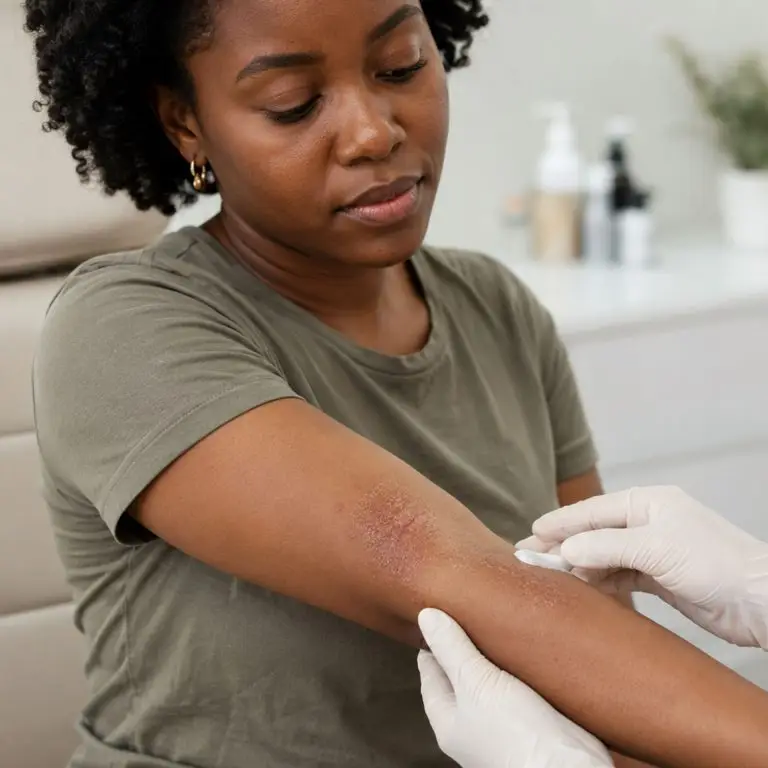
On lighter skin, affected areas may look pink or red. On darker skin tones, they may appear brown, purple, gray or darker than the surrounding skin.
The location often changes with age. Eczema can affect the face, scalp, hands, feet, arms, legs and folds of the elbows or knees.
Atopic dermatitis involves a combination of genetic tendencies, immune-system activity and weakness in the skin barrier. When the barrier does not hold moisture effectively, the skin becomes dry and more easily irritated.
Flares may be triggered or worsened by:
Atopic dermatitis is not contagious.
A dermatologist usually diagnoses atopic dermatitis by examining the skin and reviewing the pattern and history of symptoms.
Testing may be recommended when another condition is suspected. Patch testing can help identify allergic contact dermatitis, while a skin sample may be collected when infection or another rash is possible.
Food testing is not routinely necessary for every patient with eczema. Testing should be guided by a specific history of possible food reactions.
A personalized plan may include:
The treatment selected depends on age, severity, location and response to previous therapy.
Use lukewarm rather than hot water and apply moisturizer shortly after bathing or washing. Choose fragrance-free cleansers and laundry products.
Keep fingernails short and avoid scratching whenever possible. Contact the office if the skin becomes increasingly painful, warm, crusted, blistered or draining, as these may be signs of infection.
Persistent itchy skin can affect sleep, concentration and daily comfort. The Dermatology Clinic can confirm the cause of the rash, identify possible triggers and create a plan for both active flares and long-term control. Contact us today to get scheduled.
We would love to get started on a solution that perfectly fits your needs.