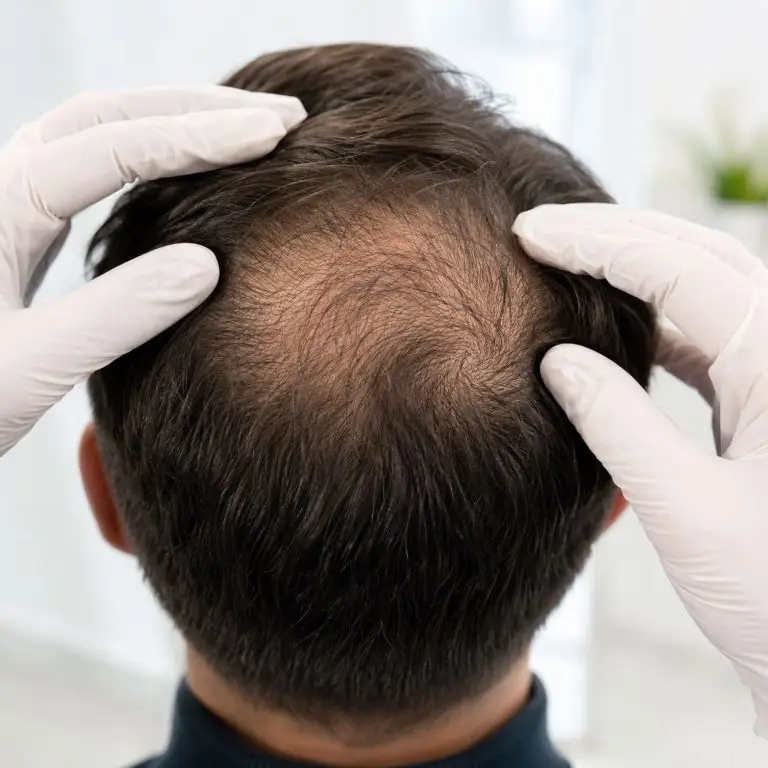
Hair loss can affect people of all ages and may develop gradually or appear suddenly. It can involve mild thinning, excessive shedding, a receding hairline, widening of the part or smooth patches where hair is completely absent.
Some hair shedding is a normal part of the hair growth cycle. However, noticeable thinning or a significant increase in shedding may indicate an underlying condition that should be evaluated by a dermatology provider.
What causes hair loss?
Hair loss has many possible causes. Some forms are temporary and improve once the underlying trigger is addressed, while others may continue without treatment.
Common causes include:
- Hereditary pattern hair loss
- Hormonal changes
- Pregnancy and childbirth
- Physical or emotional stress
- High fever, infection or serious illness
- Major surgery
- Thyroid disease
- Iron, protein or other nutritional deficiencies
- Certain medications and medical treatments
- Autoimmune conditions
- Fungal infections of the scalp
- Hairstyles that repeatedly pull on the hair
- Chemical treatments, excessive heat or damaging hair care practices
- Compulsive hair pulling
Identifying the cause is essential because different forms of hair loss require different treatments.
What are the different types of hair loss?
- Pattern hair loss: Also known as androgenetic alopecia, this inherited condition can cause a receding hairline, thinning at the crown or gradual thinning across the scalp.
- Telogen effluvium: This causes increased shedding, often several months after an illness, surgery, pregnancy, major stress, rapid weight loss or another physical change.
- Alopecia areata: This autoimmune condition commonly causes one or more smooth, round areas of hair loss on the scalp, beard or other parts of the body.
- Traction alopecia: Repeated tension from tight ponytails, braids, extensions or other hairstyles can damage hair follicles and cause thinning.
- Tinea capitis: Also called scalp ringworm, this fungal infection may cause scaly, itchy patches, broken hairs and areas of hair loss.
- Scarring alopecia: Certain inflammatory conditions can permanently damage hair follicles. Early evaluation and treatment are important to help prevent additional hair loss.
How is hair loss diagnosed?
Your dermatology provider will examine your scalp and hair and ask when the hair loss began, how quickly it developed and whether you have experienced any recent illnesses, stressors, medication changes or other symptoms.
Depending on the suspected cause, the evaluation may also include:
- A gentle hair-pull test
- Examination of the scalp with magnification
- Blood testing for nutritional, hormonal or thyroid-related concerns
- Testing for a fungal infection
- A small scalp biopsy
An accurate diagnosis helps determine whether the hair is likely to regrow and which treatment options may be most effective.
How is hair loss treated?
Treatment depends on the type of hair loss, its severity and whether the affected follicles are still capable of producing hair.
Treatment options may include:
- Topical medications
- Oral prescription medications
- Corticosteroid injections
- Treatment of scalp infections or inflammation
- Correction of an identified nutritional deficiency
- Changes to hairstyles or hair care practices
- Injectable or other in-office therapies
- Hair transplantation for appropriate candidates
Some forms of hair loss improve on their own, while others require ongoing treatment to maintain results. Because hair grows slowly, it may take several months before noticeable improvement occurs.
When should hair loss be evaluated?
Schedule an evaluation if you notice:
- Sudden or excessive shedding
- One or more bald patches
- A widening part or receding hairline
- Broken hairs or thinning around the edges of the scalp
- Scalp itching, pain, burning, redness or scaling
- Loss of eyebrows, eyelashes or body hair
- Hair loss that continues to worsen
- Hair loss that affects your confidence or quality of life
Early treatment is especially important for inflammatory and scarring forms of hair loss because follicle damage may become permanent.
Schedule a hair loss consultation
Hair loss can be caused by many different medical, genetic and environmental factors. The Dermatology Clinic can evaluate your scalp, identify the likely cause and develop a personalized treatment plan to help reduce further loss and support healthier hair growth. Contact us today to get scheduled.