
Psoriasis is a chronic, immune-mediated condition that causes skin cells to build up more quickly than usual. This can create raised, scaly patches that may itch, burn, crack or feel painful. Psoriasis is not contagious and cannot be spread through physical contact.
Symptoms can range from a few small patches to more widespread areas of affected skin. Although psoriasis can develop anywhere, it commonly appears on the scalp, elbows, knees, lower back, hands, feet and nails.
Psoriasis develops when an overactive immune system speeds up the skin’s natural growth cycle. Genetics can influence a person’s risk and symptoms may begin or worsen after exposure to certain triggers.
Common psoriasis triggers may include:
Triggers vary from person to person. Identifying your individual triggers may help reduce the frequency or severity of flare-ups.
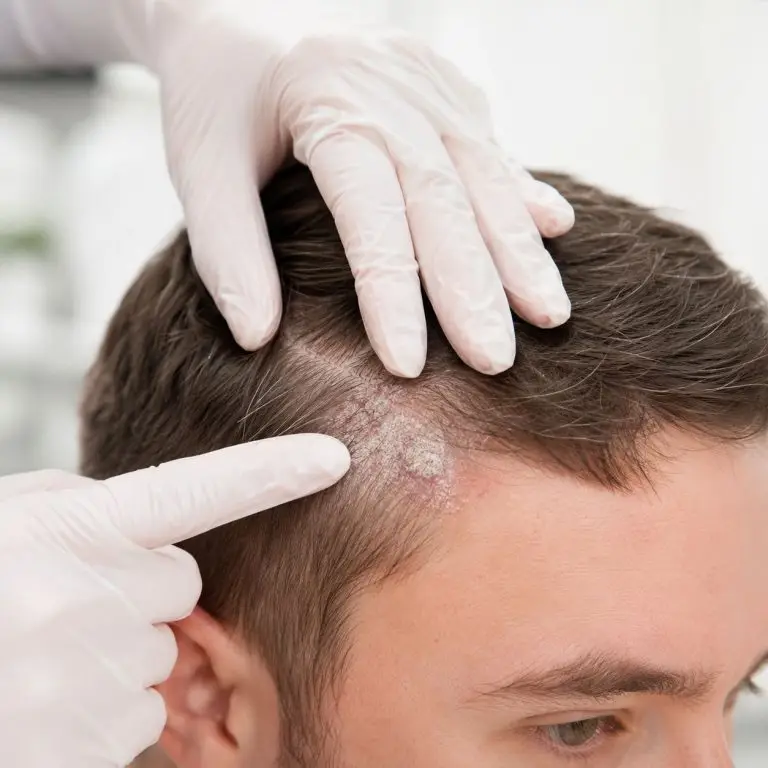
The appearance of psoriasis depends on the type and location of the condition. Plaque psoriasis, the most common form, typically causes raised areas of inflamed skin covered with silvery-white scales.
Other symptoms may include:
Psoriasis symptoms often occur in cycles, with flare-ups lasting for weeks or months followed by periods when symptoms improve or disappear.
Some people with psoriasis develop psoriatic arthritis, an inflammatory condition that can cause joint pain, swelling, stiffness and reduced movement. It may also cause swelling of an entire finger or toe, heel pain, fatigue or stiffness that is worse in the morning or after resting.
Early diagnosis and treatment can help protect the joints from permanent damage. Tell your dermatology provider if you experience new or persistent joint symptoms.
Although there is currently no cure for psoriasis, treatment can reduce inflammation, clear affected skin, relieve discomfort and help prevent flare-ups.
Treatment may include:
The best treatment depends on the type and severity of your psoriasis, where it appears, how it affects your daily life and your overall health. Your treatment plan may need to be adjusted over time to maintain the best possible results.
Psoriasis can be uncomfortable and frustrating, but effective treatments are available. The Dermatology Clinic can evaluate your symptoms, determine the type and severity of your condition and create a personalized plan to help you achieve clearer, more comfortable skin. Contact us today to get scheduled.
We would love to get started on a solution that perfectly fits your needs.