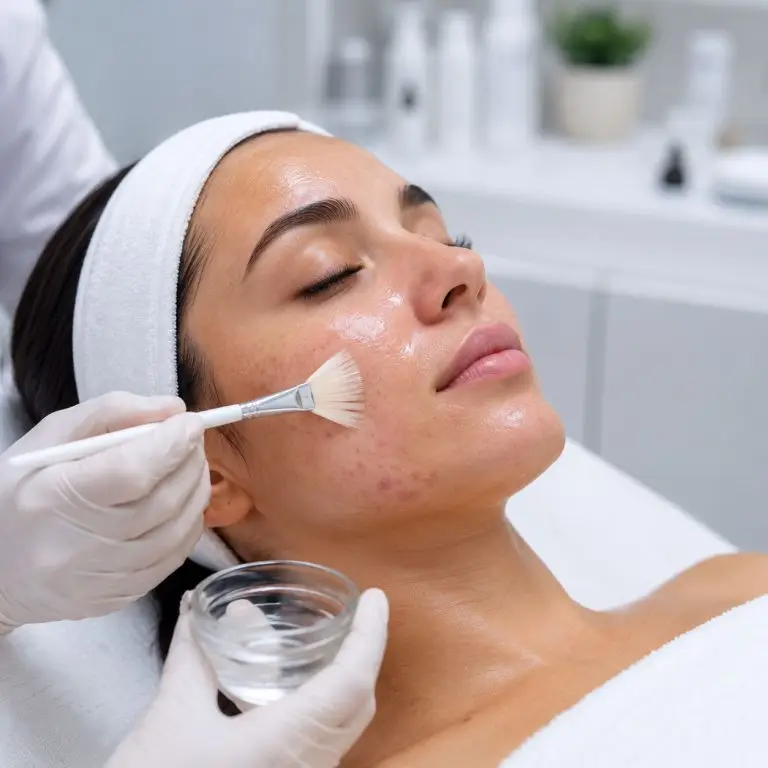
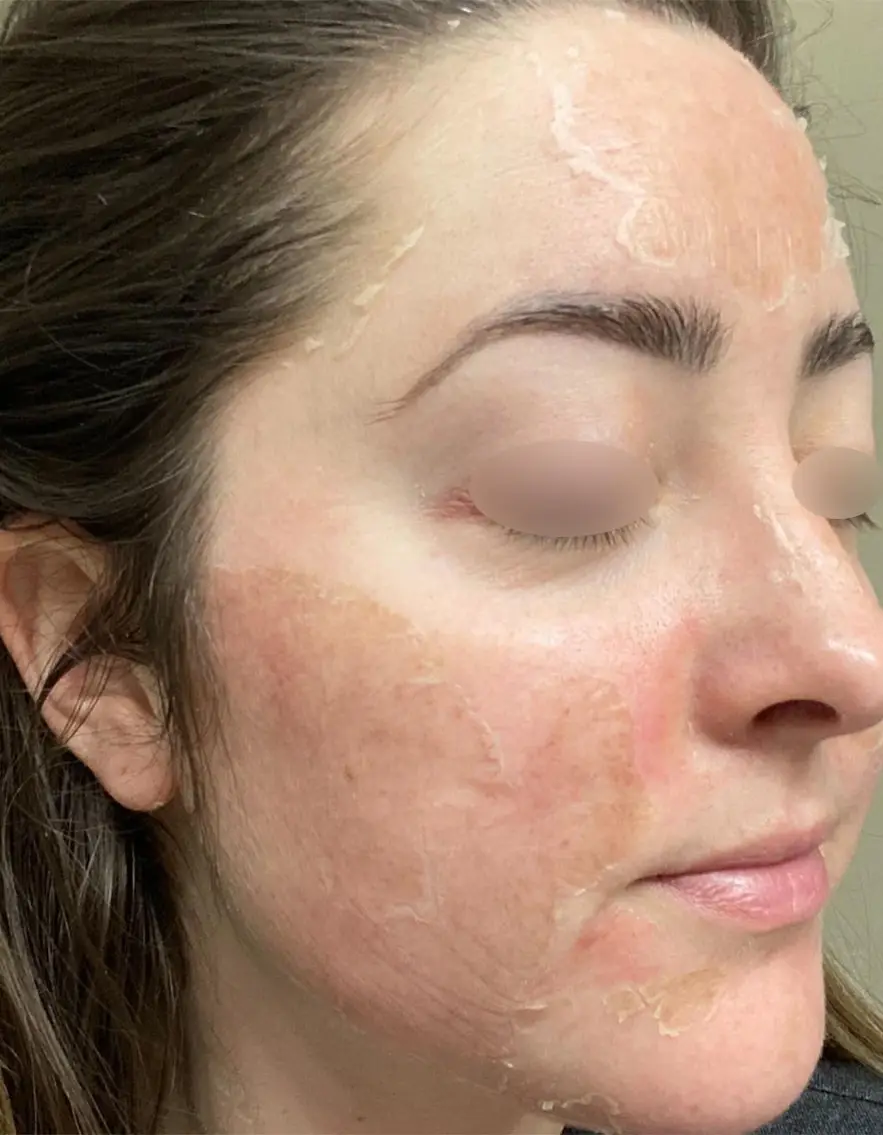
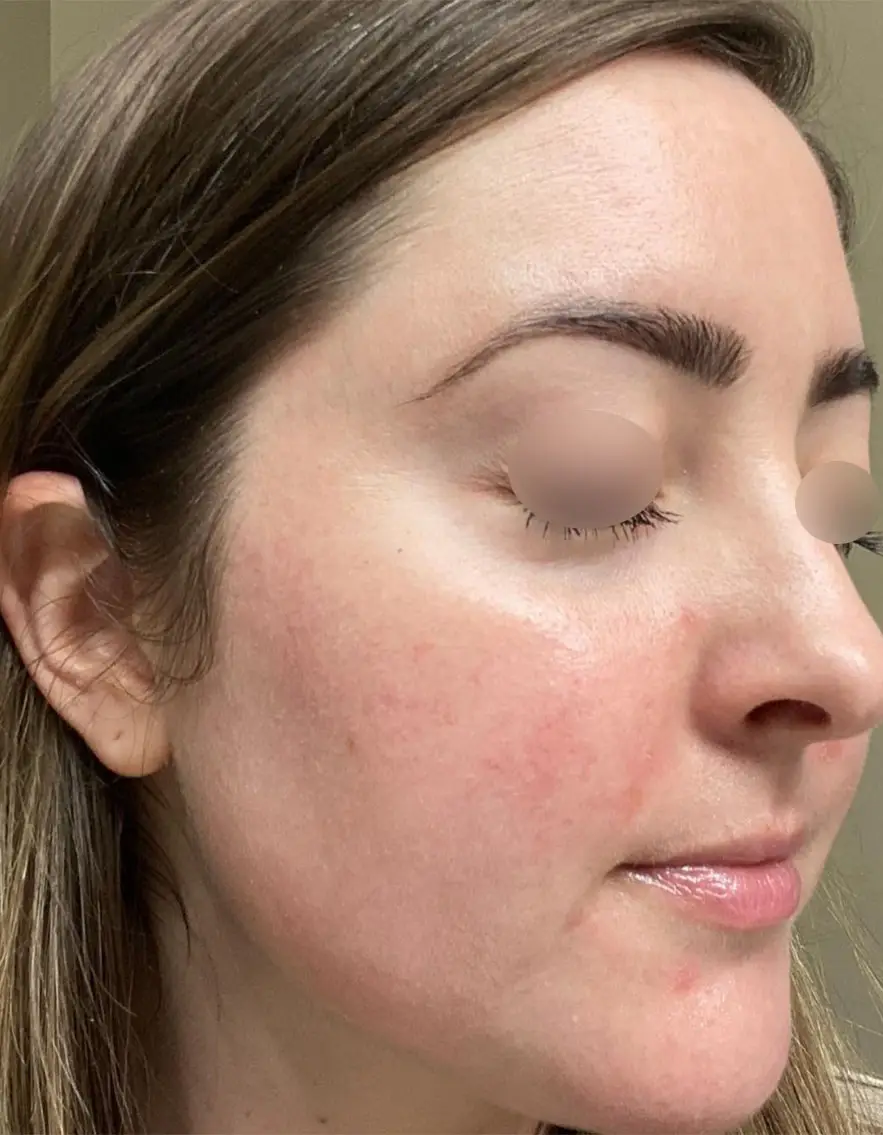
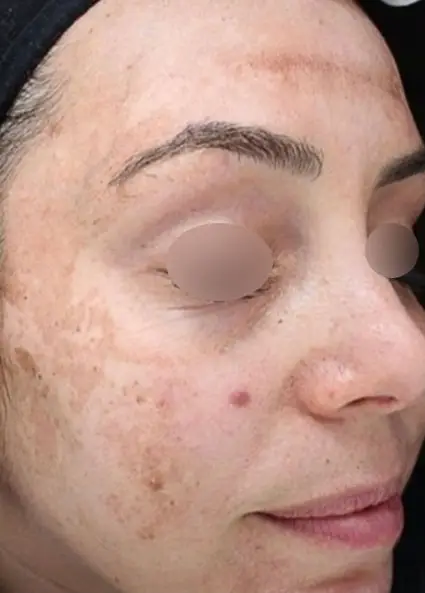
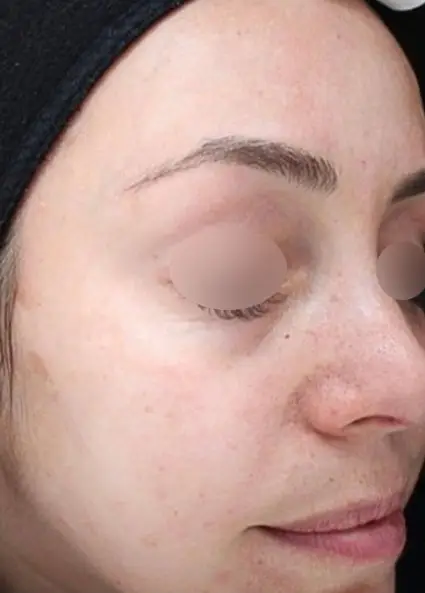
VI Peel is a professional chemical peel designed to improve discoloration, acne, uneven texture, fine lines and other visible signs of skin damage. The treatment uses a customized blend of exfoliating and skin-renewing ingredients to increase cell turnover and remove damaged surface cells.
The Dermatology Clinic offers VI Peel Precision Plus for pigmentation concerns and VI Peel Purify for acne-prone, oily or congested skin. Your licensed aesthetician will evaluate your complexion and recommend the formula best suited to your skin and treatment goals.
A chemical solution is applied in several layers during your appointment. The peel encourages damaged surface cells to shed while supporting the emergence of smoother, clearer-looking skin.
Unlike a facial that is removed before you leave, the VI Peel remains on your skin after the appointment. You will receive an aftercare kit with products and detailed instructions to follow at home.
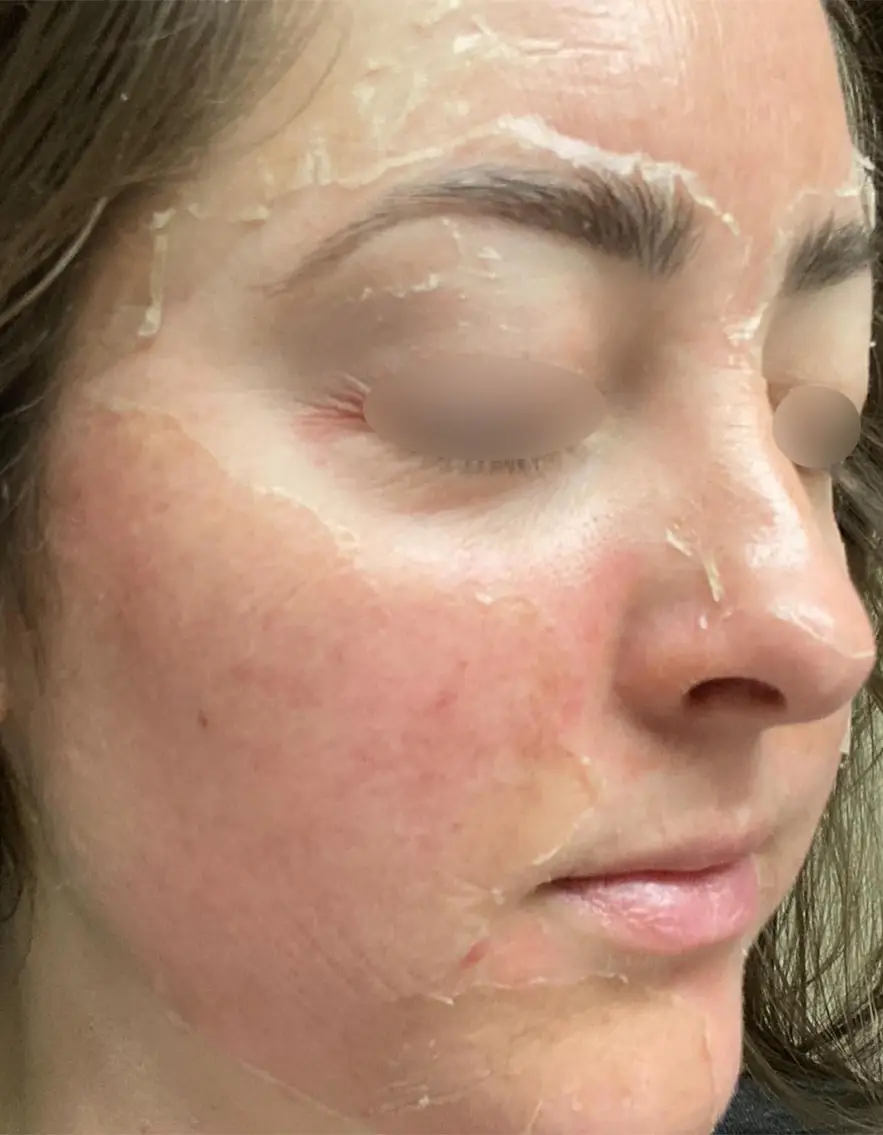
Light flaking may begin around the second day, with more noticeable peeling commonly occurring between days three and five. For many patients, peeling has significantly improved or ended by approximately day seven. The timing and amount of peeling vary from person to person.
VI Peel Precision Plus is designed for patients concerned about stubborn pigmentation and uneven skin tone. It works by encouraging cell turnover while helping regulate the processes that contribute to excess pigment.
It may be recommended for concerns such as:
The manufacturer describes Precision Plus as appropriate for all Fitzpatrick skin tones, but treatment should still be customized by a provider experienced in chemical peels and pigmentation.
VI Peel Purify is formulated for patients with active acne, excessive oil production, clogged pores or acne-prone skin. It combines exfoliating and acne-focused ingredients to clear pore buildup, reduce surface oil and improve the appearance of breakouts.
It may be recommended for:
VI Peel Purify may help reduce acne-causing bacteria, comedones and excess sebum. However, chemical peels may need to be combined with prescription or at-home acne treatments when breakouts are persistent, painful, cystic or causing scars.
Precision Plus primarily targets pigmentation, melasma, sun damage and uneven tone. Purify is designed for active acne, oiliness and congested pores.
Some patients experience both acne and post-acne pigmentation. Your provider will examine your skin and determine which formula or treatment plan is most appropriate rather than selecting a peel based only on one visible concern.
Depending on the formula selected, VI Peel may help improve the appearance of:
Chemical peels can improve superficial discoloration, texture and fine lines, but they cannot remove deep scars or wrinkles or significantly tighten loose skin.
VI Peel Precision Plus and Purify are commonly used on the face.
VI Aesthetics also offers a body peel formulated for concerns below the neck, including body acne, discoloration, rough texture, keratosis pilaris, scars and stretch marks. Body treatment availability and candidacy should be confirmed during your consultation.
Your appointment begins with a consultation to discuss your skin concerns, current products, medications, sensitivities and treatment goals.
The skin is cleansed and prepared before your aesthetician applies the selected peel in several controlled layers. Time is allowed between applications so the provider can monitor how your skin responds.
You may experience warmth, tingling or mild stinging during the first few minutes. Once application is complete, you will leave the office with the peel still on your skin and follow the provided instructions for cleansing and applying your post-peel products at home.
The peel application and review of your aftercare instructions generally take approximately 30 minutes.
Your appointment may take longer when additional consultation is needed to review your skin, medications, allergies, recent procedures or current skin-care routine.
Most patients tolerate the application well without numbing medication. You may experience mild to moderate stinging, warmth or tingling as the first layers are applied.
The sensation commonly decreases within several minutes, but comfort varies according to the formula, condition of your skin and individual sensitivity. Tell your provider immediately if you experience severe or unexpected burning.
Some patients notice light flaking as early as the second day. More visible peeling commonly begins around the mouth before spreading to other treated areas between days three and five.
Peeling often begins to decrease by day six and many patients have completed most of the process by day seven. However, some patients experience only mild flaking, while others peel more noticeably or remain dry beyond one week.
The amount of visible peeling does not necessarily determine whether the treatment was effective.
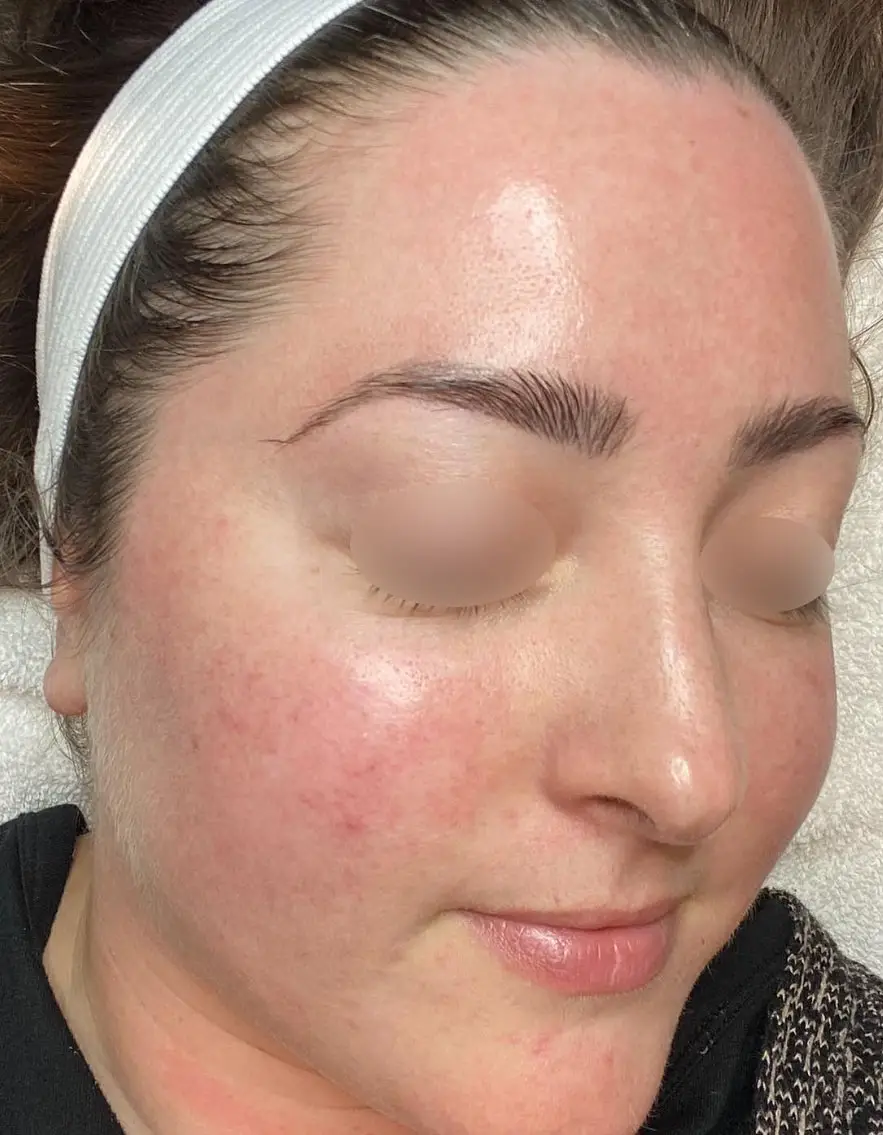
Plan for approximately one week of visible skin recovery. During this period, your complexion may feel tight, dry, itchy, sensitive or mildly irritated.
Temporary effects may include:
You may be advised to avoid makeup during active peeling or until the skin is intact. Follow the instructions in your aftercare kit rather than attempting to cover or accelerate the peeling process.
Many patients notice brighter, smoother and more even-looking skin after the peeling process has ended. Initial improvement may be visible after approximately seven days, although dryness or flaking can occasionally continue longer.
Pigmentation, acne, fine lines and textural concerns generally improve more gradually and may require a series of treatments. Results vary according to the selected formula, condition being treated, sun exposure, skin-care routine and individual response.
A single VI Peel can provide a temporary refresh for dullness, mild congestion or uneven-looking skin.
For more progressive improvement, The Dermatology Clinic generally recommends a series of three treatments. The spacing between appointments will be determined by your provider based on your skin’s recovery and treatment goals.
The brighter, smoother appearance following a VI Peel may remain noticeable for several months when supported by appropriate skin care and sun protection.
Results are not permanent. Acne, melasma, sun exposure, hormones, aging and environmental damage can continue to affect the skin. Periodic maintenance peels and a customized at-home regimen may help preserve your improvement.
Before your appointment:
Your provider may recommend a longer preparation period or a specialized pigment-control regimen based on your skin tone and history.
Your aftercare kit will contain the products and instructions needed during the peeling process. Use each product according to the provided schedule.
During recovery:
Protecting the skin from sunlight is essential because newly exfoliated skin may be more vulnerable to irritation and pigment changes.
Do not pull, peel or aggressively remove loose skin. Picking can expose skin that is not ready to shed and may cause bleeding, infection, discoloration or scarring.
Allow the skin to separate naturally. Follow your provider’s instructions if a piece of loose skin becomes uncomfortable rather than attempting to accelerate the process yourself.
Activities that produce significant heat or sweating may increase irritation during the early recovery period. Your provider may advise temporarily avoiding strenuous exercise, saunas, steam rooms and hot tubs.
Light daily activities are usually acceptable, but follow the instructions supplied with your peel and delay any activity that causes burning, excessive redness or discomfort.
Your provider may recommend avoiding makeup during active peeling and until the skin’s surface is intact. Makeup can emphasize flaking, irritate sensitive skin or introduce bacteria into areas where the skin barrier is temporarily compromised.
When makeup is resumed, use clean brushes and applicators and stop using any product that causes burning or irritation.
VI Peel formulas are marketed for a broad range of skin tones, including melanin-rich skin. However, no chemical peel is completely free of pigmentation risk.
People with brown or Black skin can safely receive chemical peels, but selecting the correct formula and preparation plan is especially important because inflammation can cause temporary or lasting darkening or lightening of the skin. Treatment should be performed by a provider experienced in chemical peels for your skin tone.
Expected effects include redness, tightness, dryness, itching and peeling.
Less common complications may include:
Chemical peels should be performed under professional supervision. Incorrect product selection, application or aftercare can increase the risk of burns, infection, scarring and permanent pigment changes.
Contact the clinic if you experience:
Do not attempt to treat a severe reaction with additional acids, exfoliants or unapproved products.
VI Peel may be appropriate for patients who want to improve acne, pigmentation, melasma, mild fine lines, rough texture or sun-damaged skin without undergoing laser resurfacing or a more invasive procedure.
Good candidates generally:
A consultation is necessary even though the formulas can be used across a broad range of skin types and tones.
Treatment may need to be postponed or avoided if you:
The current clinic protocol also advises patients with almond allergies not to receive the treatment. Provide a complete allergy, medication and medical history so your provider can determine whether a peel can be performed safely.
Chemical peels may be incorporated into a broader plan involving acne medication, pigment-correcting products, injectables, microneedling, laser services or other aesthetic treatments.
These services should not automatically be performed together. Your provider will determine the safest timing and order based on your skin, the selected peel formula and any recent procedures.
VI Peel combines an in-office professional peel with a structured seven-day home-care process. Rather than ending when the application is complete, treatment continues through the use of post-peel products and carefully timed aftercare.
Several formulas are available for different concerns, allowing the treatment to focus on pigmentation, acne, texture or visible aging rather than using the same peel for every patient.
VI Peel Precision Plus and Purify provide customizable options for addressing pigmentation, melasma, active acne, congested pores, uneven texture and other visible skin concerns. The Dermatology Clinic can evaluate your complexion, recommend the appropriate formula and provide a personalized preparation and aftercare plan to help you achieve brighter, clearer and more even-looking skin. Contact us today to get scheduled.
We would love to get started on a solution that perfectly fits your needs.